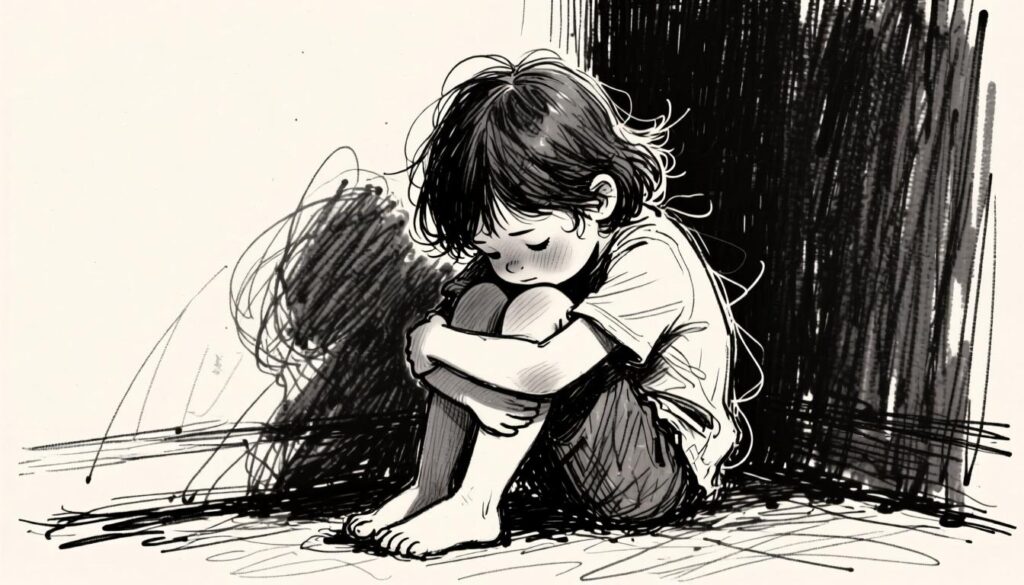
What does it mean to be hurt by the world — and to carry that hurt forward? Five recent books, wildly different in form and register, circle this question from opposite ends of the literary spectrum. The End of the World As We Know It is at turns tragic and funny, romantic and gross, sentimental and nihilistic — a chorus of 36 voices excavating the ruins of civilization. We Don’t Talk About Carol is an intimate family mystery tracking the silence that grows over a wound for sixty years. The Dungeon Anarchist’s Cookbook is an absurdist LitRPG in which humanity’s survivors are forced to perform their terror as entertainment. I, Medusa is a mythological retelling of a young woman punished for a crime done to her. And Automatic Noodle is a cozy novella about abandoned robots building a noodle shop in a postwar city. These books could not be more different. And yet trauma — its shape, its silence, its strange relationship to survival and identity — runs through all five like a fault line.
The most consistent element across all five books is trauma understood not as an event but as a relationship between an event and what comes after. None of these books are interested in the wound itself so much as the scar tissue.
In The End of the World As We Know It, the wound is civilizational: a plague that kills most of humanity and leaves survivors to rebuild from almost nothing. In a world gone to hell, who can you trust? Each story intentionally walks down that path — what would you do to survive, no matter what that means? But the anthology’s finest entries understand that the Superflu isn’t really the trauma; the trauma is the silence afterward, the moment when the immediate crisis has passed and all that’s left is the particular shape of what you’ve lost. Hailey Piper’s “Prey Instinct” takes you into the brutal reality of going mad in a world that doesn’t give a damn. This is trauma as cognitive unraveling — the mind consuming itself when the external threat recedes.
We Don’t Talk About Carol operates in a register that couldn’t seem more different — domestic, contemporary, literary — but it is equally concerned with what fills the space where a wound should be spoken of. Years earlier, while working the crime beat as a journalist, protagonist Sydney’s obsession with the case of a missing girl led to a psychotic break. Now, in the suffocating grip of fertility treatments and a crumbling marriage, her relentless pursuit for answers might lead her down the same path of self-destruction. The novel understands trauma as cyclical and genetic, as something passed through families like a dominant gene. Carol’s disappearance sixty years earlier doesn’t just leave a hole; it leaves a shape — a set of silences and avoidances that warp every generation that inherits them. The culture of silence surrounding missing Black girls and the grief it generates is both a societal trauma and a deeply familial one, and Berry refuses to separate the two
I, Medusa is about a young woman caught in the crosscurrents between her heart’s deepest desires and the cruel, careless games the Olympian gods play. The trauma here is most nakedly named: assault, victim-blaming, punishment for a crime committed against her. It was Medusa who was turned into a horrible monster for her “crime,” as were her sisters for defending her, and it was the rapist, Poseidon, who remained unpunished. Gray’s great insight is that the myth of Medusa — how the world has always told it — is the trauma. To be remembered only as the monster, never as the girl, is its own kind of violence, one that compounds and extends the original harm across centuries. This is a sharp, feminist exploration of power, manipulation, and how “monsters” are made.
The Dungeon Anarchist’s Cookbook wraps its trauma in the most unlikely packaging: gonzo dungeon-crawling absurdism. But the NPCs who are traumatized in this book, along with the emotional depth given to the survivors of the Borant Corporation’s alien invasion of Earth, are genuinely something to behold. That balance between unhinged dungeon chaos and very real life and death consequences is what makes the series work. Dinniman is doing something unusual for the genre: using the scaffolding of LitRPG — stat screens, level-ups, televised combat — to interrogate what it costs to perform survival for an audience. Carl and Donut’s trauma is publicly spectacular in a way that most trauma isn’t. The dungeon’s entertainment apparatus forces them to aestheticize their own suffering, and the series asks what that does to a person.
Automatic Noodle handles trauma most obliquely of all, which is part of what makes it worth examining alongside the others. A group of deactivated robots come back online in an abandoned ghost kitchen after a devastating war. They cannot eat; they have no human memories of loss; they were designed to serve. And yet Newitz makes clear that abandonment — being simply switched off and forgotten — is its own category of harm. These characters are one bad day away from being crushed by systems much bigger than them. The warmth never cancels out the tension. The robots’ trauma is structural and quiet: they exist in a legal gray zone, their rights partial and precarious, their sense of personhood unconfirmed by law. Their limited civil rights mean what they’re doing isn’t entirely legal even as they try to build a life for themselves. This is trauma as marginalization — the slow, ambient pressure of a world that doesn’t fully acknowledge your existence.
Despite all sharing trauma as a central concern, these five books differ profoundly in how they construct it, where they locate its source, and what they believe can be done with it.
Scale: collective vs. intimate. The anthology and The Dungeon Anarchist’s Cookbook both deal in civilizational-scale trauma — the end of the world, the invasion of Earth — and then zoom in on individual experience to find the human cost. We Don’t Talk About Carol, I, Medusa, and Automatic Noodle reverse this: they begin in the personal and let the wider world’s violence radiate outward from a single life. Berry’s novel links Sydney’s private breakdown to the systemic devaluation of Black girls’ lives; Gray links Medusa’s assault to the entire machinery of patriarchal myth-making; Newitz links four robots’ precarious existence to a society still sorting out who counts as a person after a war. The macro is always present, but the intimacy of the lens differs radically.
Perpetrator: systems vs. individuals. A striking distinction is where each book locates the source of trauma. We Don’t Talk About Carol and I, Medusa both name specific perpetrators while gesturing at the systems that protect them — the disproportionate treatment of missing Black girls by police and media in Berry’s novel; the Olympians’ impunity in Gray’s. The End of the World As We Know It distributes culpability across an indifferent universe — the Superflu has no perpetrator, which is part of what makes its trauma so disorienting. Automatic Noodle places its harm in diffuse structural bigotry: the review-bombing campaign against the robots is an allegory about society and power, about the resilience of any marginalized community in the face of oppressive tactics used by those within the dominant culture. The Dungeon Anarchist’s Cookbook is perhaps most explicit: the alien Borant Corporation deliberately engineers suffering for profit, making the perpetrator capitalism itself dressed in science fiction clothing.
Response: silence vs. transformation. Most revealing is what each book believes trauma does to people over time. Berry’s novel argues that trauma becomes silence — that the worst thing a family can do with a wound is not speak it, because the silence grows its own pathology. Gray’s novel argues that trauma becomes monstrousness — not the survivor’s, but the world’s monstrousness in deciding to call the victim a monster. Dinniman’s series argues that trauma becomes performance — that survival, when it is watched, becomes a kind of costume. Newitz, working in the cozy register, makes the most quietly radical argument: that trauma can become purpose. The robots’ abandonment, their marginality, their ambiguous legal personhood — these become the engine for community-building, creativity, and found family. To survive and thrive in a world that wasn’t built for them, they call on their customers, their community, and each other. The anthology, by virtue of containing 36 voices, makes all of these arguments at once.
Inheritance: individual vs. generational. Perhaps the sharpest divergence is temporal. We Don’t Talk About Carol is uniquely preoccupied with how trauma travels through time within families — how Carol’s disappearance in the 1960s deforms Sydney’s psychology in the 2020s without Sydney ever having met her aunt. This is inherited trauma, passed silently between generations. I, Medusa makes a parallel argument across millennia: the violence done to Medusa has been re-narrated for thousands of years as heroism, which means the trauma renews itself every time Perseus’s story is told. The anthology and Automatic Noodle are more concerned with the immediate aftermath — what happens in the weeks and months after catastrophe, before anything like history has formed. The Dungeon Anarchist’s Cookbook operates on the shortest timeline of all: trauma here is almost instantaneous, each floor of the dungeon generating new wounds before the old ones can process.
Read together, these five books suggest something about the literary moment they belong to. None of them treat trauma as a condition requiring resolution. None of them promise healing in any tidy sense. The anthology ends on ambivalence; Carol’s family ends on understanding rather than closure; Medusa ends on rage and reclamation rather than peace; the dungeon offers no exits, only strategies; and the robots win a battle, not the war. What these books share, across every difference of genre and register, is a deep skepticism toward the idea that the wound eventually heals.
What they offer instead — and what may be the more honest thing — is the idea that the wound can be used: as witness, as testimony, as the engine of community, as the refusal to be only what it made you.
That is, perhaps, the most human claim any of these books makes. And that all five make it, in such different voices, across such different worlds, suggests it may be true.