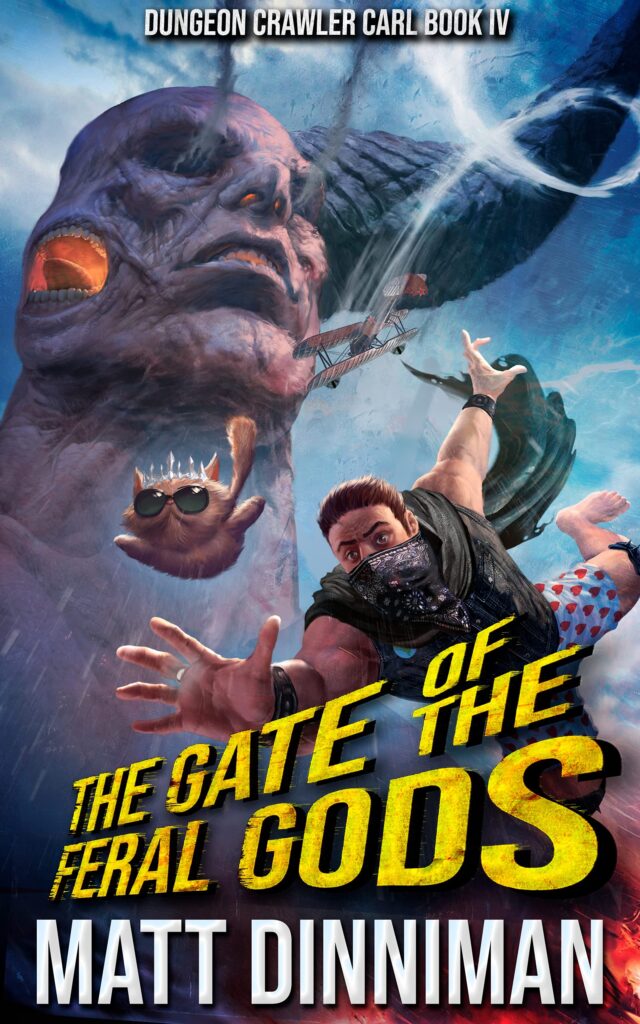
Six books in, the Dungeon Crawler Carl series keeps proving it’s smarter than its absurdist premise suggests, and Gate of the Feral Gods might be the darkest entry yet. Dinniman continues to use the game-show dungeon as a brutally effective metaphor for systems that consume the people trapped inside them, and this installment leans hard into the cost of that consumption.
The book is at its best when tracking what survival actually does to people over time. Carl is no longer just a guy improvising his way through floors; he’s a leader now, and Dinniman doesn’t let that role come cheap. The weight of decisions made for other people, the erosion of certainty about what’s right, the way command isolates you even when you’re never alone—all of it lands with more gravity than earlier books, which mostly let Carl be reactive and righteously furious. Here the fury has consequences.
The series’ satire of exploitative entertainment and audience complicity sharpens too. The “viewers” aren’t background noise; they’re an active force shaping outcomes, and Dinniman keeps drawing the line between spectacle and atrocity uncomfortably thin. There’s real teeth in how the book frames suffering as content, and survival as something that can be monetized out from under you.
Where the book takes the biggest risk is Donut and the handling of trauma and identity fragmentation—dissociation, splintering selfhood, the psychological wreckage of repeated violence and powerlessness. It’s some of the most ambitious material in the series, and mostly earns its ambition. My one hesitation is that the sheer density of plot—new floors, new factions, new systems to track—sometimes crowds out space for that trauma to breathe. A few of the heaviest emotional beats get resolved or moved past faster than they probably should, given how much weight they’re carrying.
The thread of resistance against the authoritarian structures and its rigged structures remains compelling, if still mostly table-setting for future books. Dinniman is clearly building toward something larger, and the patience required to get there is the book’s biggest ask of readers.
Still one of the most surprisingly substantive series in LitRPG right now. Recommended, especially for readers already invested.