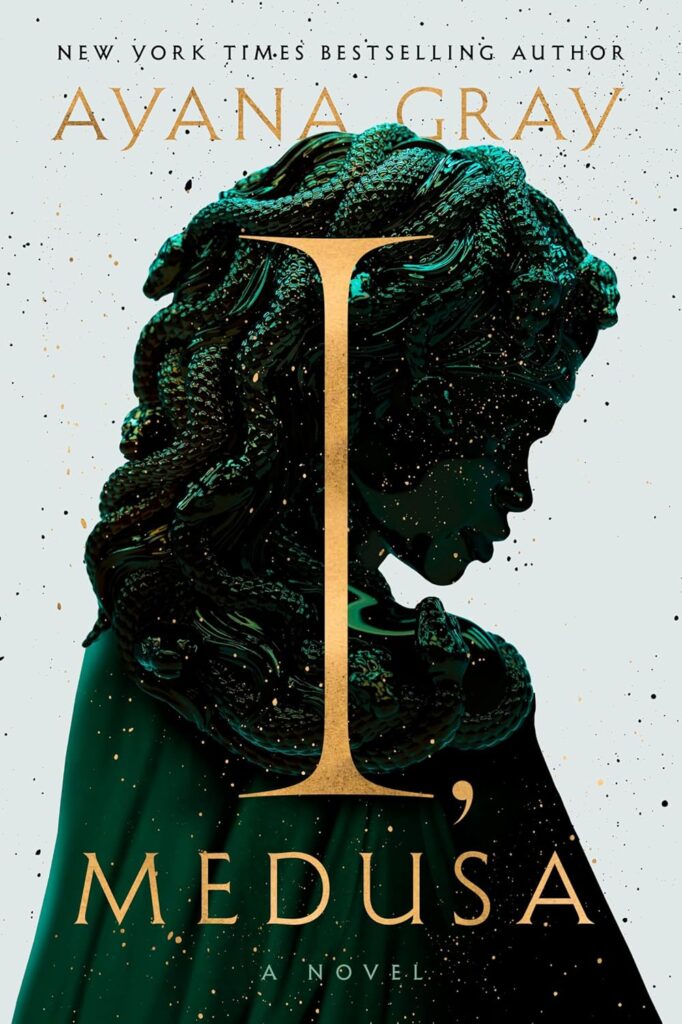
Avana Gray’s I, Medusa offers a compelling reimagining of the classic Greek myth, centering Medusa’s perspective in a narrative about transformation, trauma, and reclaiming power. The novel follows Medusa’s journey from a young woman devoted to Athena’s temple to her infamous transformation into the snake-haired Gorgon. Gray explores how Medusa’s monstrous form emerges not from divine caprice but from a culmination of betrayal, violation, and suppressed rage finally finding its outlet.
The book’s greatest strength lies in its examination of otherness and powerlessness. Gray deftly illustrates how Medusa’s story intersects with purity culture, sexual grooming, and rape culture, showing how systems of power fail those they claim to protect. The transformation into something “monstrous” becomes simultaneously an act of self-empowerment and a manifestation of justified fury. There’s real emotional resonance in watching Medusa discover purpose and agency through her metamorphosis.
However, the novel occasionally stumbles under the weight of its own messaging. While the commentary on patriarchal structures and bodily autonomy is important and well-intended, it can feel preachy at times, with certain scenes prioritizing the message over narrative flow. The thematic elements, though relevant and thoughtfully considered, are sometimes delivered with a heavy hand that undercuts the story’s more subtle emotional moments.
Despite these flaws, I, Medusa succeeds as both a feminist retelling and an exploration of how trauma and rage can be transformed into something magnificent. Readers looking for a myth retelling with modern resonance will find much to appreciate here, even if the execution doesn’t always match the ambition.