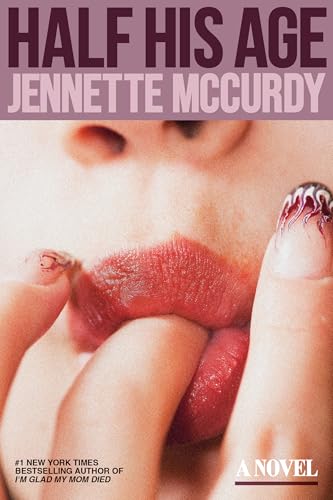
McCurdy’s fiction debut follows Waldo, a seventeen-year-old in Anchorage living with her single mother, a Safeway bagger cycling through one needy relationship after another. Waldo manages her own loneliness through compulsive online shopping, treating a Shein order like it might fix something deeper. Then Mr. Korgy arrives as her new English teacher, introducing himself to the class as a self-described failure who gave up on his own writing dreams, and something about his bluntness cracks Waldo open. She starts writing raw, confessional assignments aimed less at a grade than at getting his attention. What follows is McCurdy tracing, with real care and real discomfort, exactly how that dynamic develops over the course of Waldo’s senior year.
This is a book about female rage, power, and desire, and about how grooming can disguise itself as being seen for the first time. McCurdy, drawing loosely on her own experience with an age-gap relationship in her late teens, is careful to note the novel isn’t autobiography, but the lived-in specificity of Waldo’s loneliness and self-loathing is unmistakably informed by someone who has actually felt it. What sets this apart from a lot of grooming narratives is the refusal to let Waldo be purely a victim on the page; she’s given real interiority, real complicity in her own choices, and real rage that doesn’t resolve into tidy catharsis. It’s also, improbably, very funny in places, which makes the darker turns land harder rather than softer.
Waldo’s narrative voice is the book’s engine: sharp, self-aware, and darkly funny in a way that keeps you turning pages even when the material is genuinely hard to sit with. McCurdy handles the grooming dynamic with real precision, letting readers see exactly how it works from the inside without ever excusing it. The compulsive-shopping detail and the general texture of Waldo’s home life do a lot of quiet work establishing why she’s so hungry for the attention Korgy offers.
If I had to provide criticism for this book, I would have to mention that it is deliberately provocative, and a few scenes push past uncomfortable into territory that some readers will find gratuitous rather than illuminating. I might also mention that Mr. Korgy himself stays somewhat opaque; we understand Waldo’s side of the dynamic far better than his, and a little more insight into him might have deepened the book’s central relationship.
This is a bold, uncomfortable, genuinely well-written debut that trusts its reader to sit with material most novels flinch from. Waldo’s voice alone makes it worth reading, and McCurdy proves her memoir’s narrative command translates to fiction. It isn’t a perfect book, and it isn’t an easy one, but it’s a memorable one, and I’d recommend it to readers who want fiction that pushes rather than soothes.