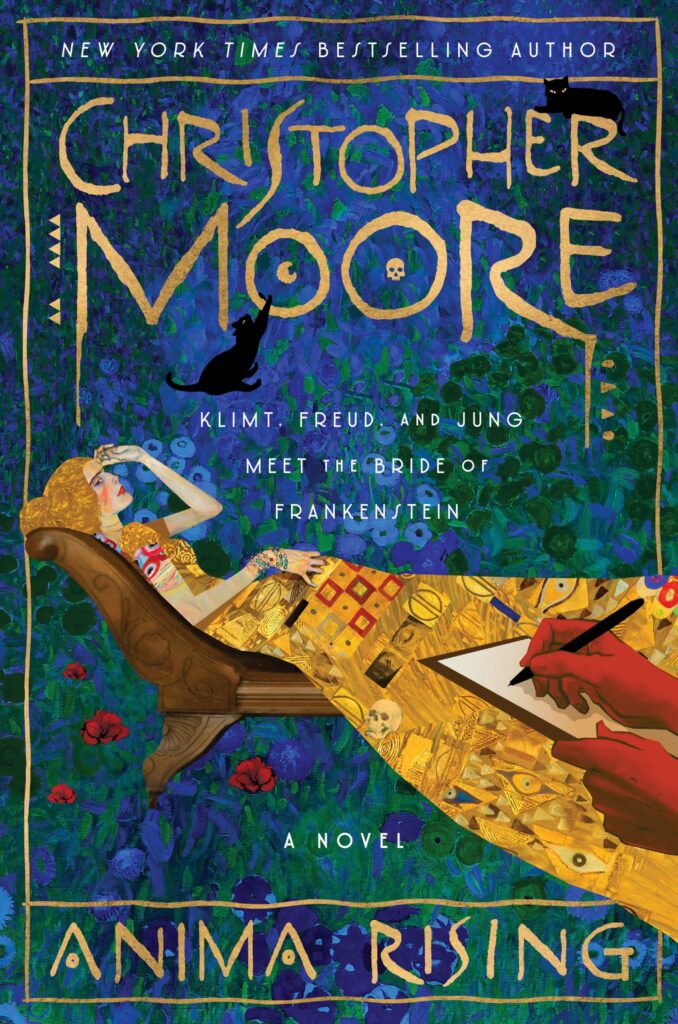
Christopher Moore takes a wild premise—Lilith (a.k.a Judith), freshly unfrozen from a block of Arctic ice in 1911 Vienna, crossing paths with a young Carl Jung—and uses it as scaffolding for something more ambitious than his usual comic romp. At its best, the novel is a sharp interrogation of who gets to own a story, and who gets turned into one.
The strongest thread here is Lilith herself: a woman who has survived millennia of being mythologized, demonized, and diagnosed by men who never bothered to ask what she actually wanted. Moore uses her to needle psychoanalysis itself—Jung and his theories of the anima and the collective unconscious become both subject and target, as a man builds elaborate frameworks for the female psyche while a literal embodiment of female experience sits across from him, unread. It’s a clever inversion, and Moore clearly relishes using myth as a lens to expose how easily women’s interiority gets flattened into archetype, symptom, or symbol. The novel’s anger about historical exploitation—medical, sexual, institutional—comes through with real teeth beneath the jokes.
Moore also has fun with the tension between creative imagination and lived reality. Jung’s theorizing and Lilith’s actual survival keep talking past each other, and the gap between the beautiful story we tell about the unconscious and the messy, embodied truth of being a woman moving through history is where the book does its best work.
Where it falls short is depth of follow-through. Moore’s comic instincts sometimes undercut the very themes he’s raised—just as Lilith’s agency or rage reaches something genuinely unsettling, a joke arrives to relieve the pressure, and the emotional weight doesn’t always get to land. The psychoanalytic material, while pointed, occasionally feels more like clever set dressing than fully dramatized argument. I wanted a little more nerve, a willingness to sit in discomfort rather than resolve it with a punchline.
Still, this is Moore reaching further than usual, and mostly sticking the landing. Recommended for readers who like their myth subversion with a side of dark comedy.